Book Festival
“The World’s Borough” first Book Festival
Ever been to a show where there were more people on stage than there were in the audience?
That was a bit the feel of the first edition of the Queens Book Festival, a grass-root initiative born of the will to support literacy and encourage interaction with local authors. The setting – the back lot of Kaufman Studios – was airy; the temperature, perfect for a New York City August afternoon… even if holding the event on a Sunday made it a bit extra challenging to get there for non Queens residents, thanks to the usual weekend subway disruptions. However, panels discussed topics ranging from “Language, Power and Censorship” to “Queens Scene: Setting Novels in the World’s Borough“: authors exchanged, books were flipped through, bought and sold. 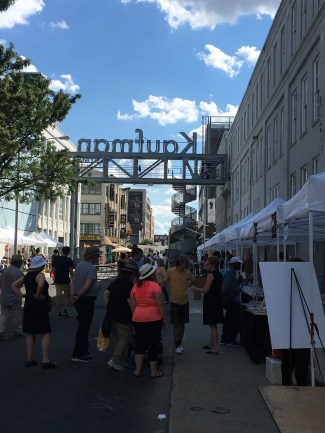
One of the emphasis, given the original motivation for the festival, was on children and teen literature. What makes a good teen novel? According to the reader supporting Selena Castroville’s “Melt”, the magic ingredients are action, feelings, and sex: “Teens might not be active, but they sure are curious”. To be avoided: background and descriptions. The author, who also publishes children history books and poetry, does indeed have a style that moves briskly. Across the alley, the Omnivorous Traveler was happily peddling his recipes for food-fueled adventures in the Americas. A bit further, a little girl had dived deep into chef Alyssa Gangeri’s “Mimi adventures in baking“. I am guessing someone is having chocolate chip cookies tonight.
One of the interesting aspects of this festival were the publishers who chose to be there. Akashic Books, with its “Reverse-gentrification of the literary world” slogan, and its publishing of “Queens Noir” in the series of locally sourced thrills, had to be there. And yes, they are the publishers of the cult “Go the _______ to Sleep“. Another interesting offer came from New Vessel Books, who invites you to “read your way around the world”. This publishing house specializes in translations, a too-slim segment of books available in the United States, as documented by the “Three Percent” initiative from Rochester University.
So, was this first edition a great success? By the numbers, probably not. But by the quality of the conversations, the obvious joy of children exploring the stands specifically devoted to their interests, and the opportunity given to emerging local authors, this was a great start. With a little luck and a lot of efforts, it can only get better next year. Because there will be a next year, right?
 Book roamin'
Discussion